



Effect of the COVID-19 Pandemic Lockdown on the Management of Diabetic Retinopathy: A Cross-Sectional Study
Introduction Worldwide, diabetic retinopathy (DR) is one of the leading causes of vision loss. Early treatment and screening for DR have a major role in reducing the rate of the...
Conclusions: COVID-19 has severely impacted the routine follow-up of DR and, in the subsequent years, there might be an increased incidence of severe outcomes due to DR. The second wave of COVID-19 and its lockdown have had very significant effects on the visual outcome of untreated DR patients.
Association between structural and functional treatment outcomes in neovascular age-related macular degeneration - PubMed
Source : https://pubmed.ncbi.nlm.nih.gov/36036674/
In this retrospective cohort study, the presence of intraretinal fluid was associated with poorer visual outcome in neovascular AMD patients treated with anti-VEGF, but the presence of subretinal fluid and...
Conclusion/Relevance: In this retrospective cohort study, the presence of intraretinal fluid was associated with poorer visual outcome in neovascular AMD patients treated with anti-VEGF, but the presence of subretinal fluid and PEDs was not. This suggests that IRF is worse than subretinal fluid and PEDs for AMD outcomes and therefore requires...
Systemic and Ocular Adverse Events with Intravitreal Anti-VEGF Therapy Used in the Treatment of Diabetic Retinopathy: a Review - Current Diabetes Reports
Source : https://link.springer.com/article/10.1007/s11892-022-01491-y
Purpose of Review Intravitreal anti-vascular endothelial growth factor (VEGF) agents are used routinely in the management of neovascular conditions including proliferative diabetic retinopathy and diabetic macular edema. While the efficacy...
Summary: Intravitreal anti-VEGF therapy is used in the treatment of diabetic retinopathy, macular degeneration, and other diseases. These agents are associated with a variety of ocular and systemic adverse events that ophthalmologists should always consider.
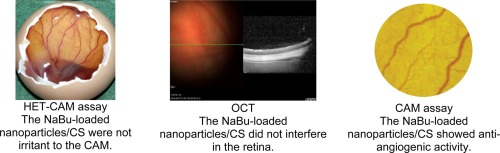
Sodium butyrate-loaded nanoparticles coated with chitosan for the treatment of neovascularization in age-related macular degeneration: Ocular biocompatibility and antiangiogenic activity
Source : https://www.sciencedirect.com/science/article/abs/pii/S0939641122001783?via=ihub
Sodium butyrate-loaded nanoparticles coated chitosan (NaBu-loaded nanoparticles/CS) were developed to treat the choroidal neovascularization in wet age-related macular degeneration (AMD). The nanoparticles were produced by double emulsification and solvent evaporation...
Relevance: Sodium butyrate-loaded nanoparticles coated chitosan (NaBu-loaded nanoparticles/CS) were developed to treat the choroidal neovascularization in wet age-related macular degeneration (AMD).

Efficacy and mechanism of anti-vascular endothelial growth factor drugs for diabetic macular edema patients
Source : https://www.wjgnet.com/1948-9358/full/v13/i7/532.htm
Diabetic macular edema (DME), which manifests clinically as visual impairment, is a common complication of diabetes[ 1- 3]. Long-term high blood glucose is the basis of DME, as it causes...
Conclusion: Anti-VEGF drugs can effectively improve CMT and SFCT, without affecting microcirculation, thus providing an effective and safe treatment for patients with DME.