


3yr
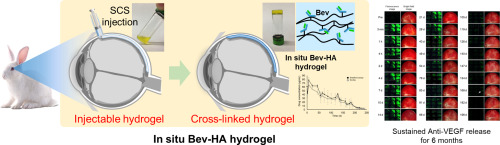
Six-month sustained delivery of anti-VEGF from in-situ forming hydrogel in the suprachoroidal space
Source : https://www.sciencedirect.com/science/article/abs/pii/S0168365922007064?via=ihub
Anti-VEGF released for 6 months from in-situ forming hydrogel in the suprachoroidal space. * Bevacizumab and hyaluronic acid crosslinked with poly(ethylene glycol) diacrylate. * Hydrogel formulation covered a large area extending to the posterior retina. * Hydrogel delivery system was well tolerated by the rabbit eye in vivo.
/>
Conclusions: Bev released from an in-situ forming hydrogel may enable long-acting treatments of AMD and other posterior ocular indications.
• Source: Journal of Controlled Release
• Conclusion: ”We conclude that Bev [bevacizumab ] released from an in-situ forming hydrogel may enable long-acting treatments of AMD and other posterior ocular indications.”
• The researchers developed a delivery system that released anti-VEGF for 6 months by means of an in situ forming hydrogel injected into the suprachoroidal space. This delivery system was well-tolerated in a rabbit eye in vivo.
• Bevacizumab and hyaluronic acid crosslinked with poly(ethylene glycol) diacrylate. The hydrogel formulation covered a large area that reached the posterior retina.
• “Patients with wet age-related macular degeneration (AMD) require intravitreal injections of bevacizumab (Bev) or other drugs, often on a monthly basis, which is a burden on the healthcare system,” the authors stated.