


OCTA Biomarker Search in Patients with nAMD: Influence of Retinal Fluid on Time-Dependent Biomarker Response
Source : https://www.tandfonline.com/doi/abs/10.1080/02713683.2023.2184318?journalCode=icey20
Abstract Previous studies have identified a link between optical coherence tomography (OCT)-derived and OCT angiography (OCTA)-based parameters in patients with neovascular AMD (nAMD); the latter may serve as direct biomarkers...
Conclusions: OCTA-based parameters VA, TVL, TNJ, and MNVarea show a strong response to anti-VEGF therapy over time, independent of the presence of IRF, SRF or RT. We conclude that the above listed OCTA parameters could contribute to our understanding of MNV biology and to guide individualized treatment in the future.

Idiopathic Choroidal Neovascularization in Pregnancy: A Case Report - PubMed
Source : https://pubmed.ncbi.nlm.nih.gov/36891017/
Choroidal neovascularization (CNV) is the abnormal growth of vessels from the choroidal vasculature to the neurosensory retina through the Bruch's membrane and is usually associated with "wet" age-related macular degeneration...
Conclusions/Relevance: A literature review was therefore undertaken to broaden our understanding of the treatment protocols and outcomes of using IVT anti-VEGF in pregnancy. This helped us to develop an understanding of the possible relative safety of such a treatment when individually tailored with a multi-disciplinary approach.

Alterations in Retinal Vessel Diameters in Patients with Retinal Vein Occlusion before and after Treatment with Intravitreal Ranibizumab - PubMed
Source : https://pubmed.ncbi.nlm.nih.gov/36836585/
Purpose : To investigate the alterations of retinal vessel diameters in patients with macular edema secondary to retinal vein occlusion (RVO), before and after treatment with intravitreal ranibizumab. Methods :...
Conclusions: A significant vasoconstriction in both retinal arterioles and venules in patients with RVO was found at month 3 after intravitreal ranibizumab treatment compared to baseline. This could be of clinical importance, since the degree of vasoconstriction might be an early marker of treatment efficacy, compatible with the idea that...
-
Retina Health Connect3yrKey Points • Source: Journal of Personalized Medicine • Conclusion: “We found a significant vasoconstriction of both retinal arterioles and venules in patients with RVO [retinal vein occlusion] 3 months after intravitreal ranibizumab treatment Show More
Do published trial results influence physician prescribing... : Current Opinion in Ophthalmology
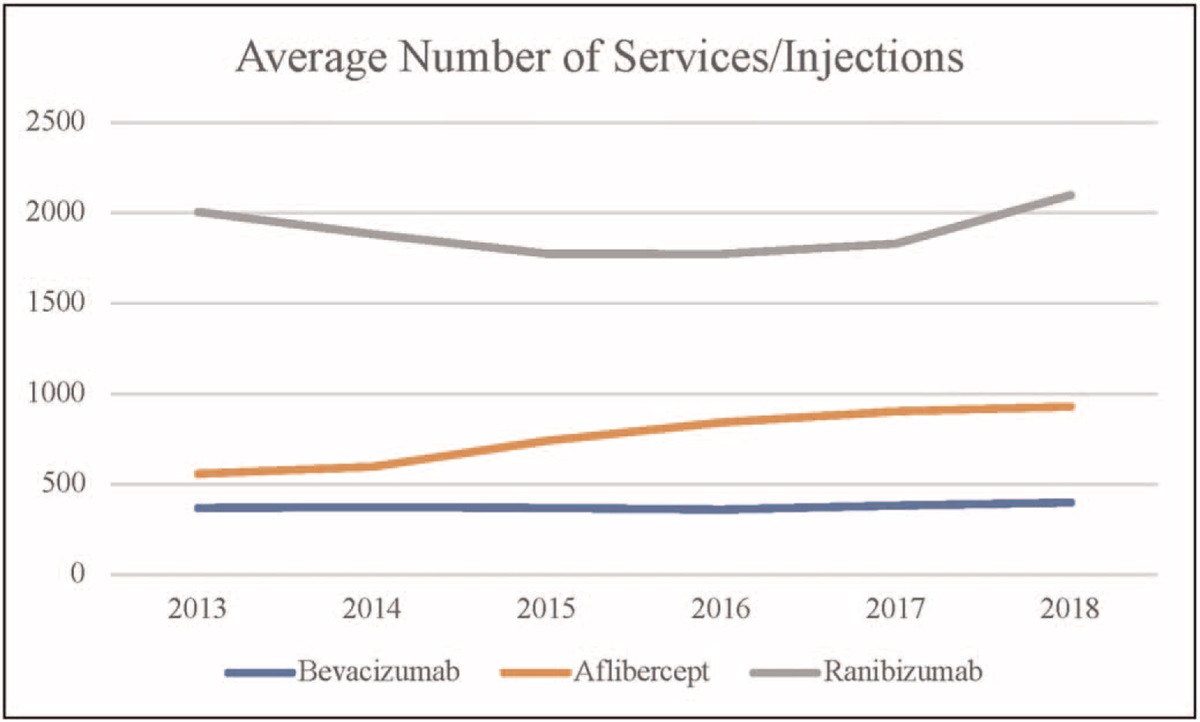
nt of diabetic macular oedema (DME). This study investigates if the Protocol T 1-year results were associated with changes in prescribing patterns. Recent findings Anti-VEGF agents have revolutionized treatment of...
Conclusions: Summary: From 2013 to 2018, there was a significant positive trend in the average number of aflibercept injections for any indication (P

Real Life Multicenter Comparison of 24-Month Outcomes of Anti-VEGF Therapy in Diabetic Macular Edema in Turkey: Ranibizumab vs. Aflibercept vs. Ranibizumab-Aflibercept Switch - PubMed
Source : https://pubmed.ncbi.nlm.nih.gov/36837465/
The aim of this study was to compare the outcomes of diabetic macular edema (DME) treated with aflibercept (AFB) or ranibizumab (RNB) only, and after switching from RNB to AFB....
Conclusions: Our study showed similar visual improvements in non-switchers (AFB and RNB groups) and switchers (RNB to AFB group) through 2 years follow-up, however, AFB patients required fewer injections, visits, or need for additional treatments.